 By Joel Paige
Bone health is easy to ignore because it rarely provides the immediate feedback that muscles, heart rate or body weight can. A person may feel stronger after a few weeks of training, yet meaningful changes in bone happen much more slowly. That delay is precisely why adulthood is the right time to treat bone strength as a long-term training objective rather than something to think about only after a fracture or an osteoporosis diagnosis.
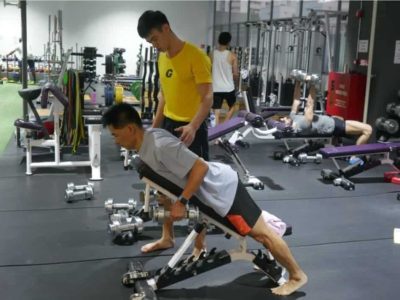
A well-equipped gym singapore can make that objective easier to pursue because it offers progressive resistance, stable training surfaces and enough exercise variety to load the skeleton in different ways. The value is not simply having access to heavy weights. It is having the means to apply an appropriate challenge, repeat it consistently and increase it gradually as the body adapts.
Bone Responds to the Demands Placed on It
Bone is living tissue. It is continually broken down and rebuilt, and mechanical loading is one of the signals involved in that process. When muscles pull on bones during resistance exercise, and when the skeleton absorbs force during weight-bearing activity, the body receives a reason to maintain the structures handling that demand.
This response is specific. Walking provides useful weight-bearing activity, but it does not challenge the hips, spine, shoulders and arms like loaded squats, presses, rows and carries. Swimming develops cardiovascular fitness, but water supports body weight and provides a different skeletal stimulus.
Age changes the expected outcome. Younger adults may still be consolidating peak bone mass, while older adults are often working to preserve bone, retain muscle and reduce fall risk. The National Institute of Arthritis and Musculoskeletal and Skin Diseases notes that resistance training is useful for bone health and that strength, balance and coordination matter for older adults.
Resistance Training Provides Measurable Progression
The skeleton needs a meaningful challenge, but random hard sessions are not the answer. Resistance training works well because the challenge can be measured and adjusted. A person can increase the load, add a repetition, improve range of motion or choose a more demanding variation while keeping the overall plan controlled.
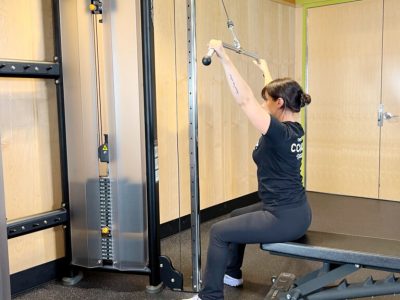
Compound exercises load several joints and muscle groups at once. Depending on experience, mobility and health history, a programme may include squat patterns, hip hinges, step-ups, presses, rows and carries. Machines offer stability, while free weights can add balance and coordination demands. The right choice allows useful loading with reliable technique.
Progression should be gradual enough for bones, tendons and joints to adapt alongside muscles. Strength can improve quickly, but connective tissues do not always progress at the same speed. Adding load whenever a lift feels easier may create a gap between muscular ability and tissue tolerance.
A Bone-Focused Week Needs More Than Heavy Lifting
Two or three well-planned resistance sessions each week can form the core of an adult bone-health programme. That does not mean every session should be maximal. Most useful work can be completed with controlled repetitions that finish before technique breaks down.
A balanced week might combine:
- Two full-body strength sessions built around lower-body, upper-body and carrying patterns
- One lighter session that emphasises single-leg work, balance and movement quality
- Regular walking, stair climbing or another suitable weight-bearing activity
- Short doses of faster movement or impact when appropriate for the individual
Impact can be helpful because bones respond to the rate and direction of force, not only to slow resistance. Small jumps, hops or brisk stair work may provide a different stimulus. However, people with osteoporosis, fragility fractures, significant joint pain or poor balance should obtain individual guidance before adding impact.
Muscle Strength Protects Bones Indirectly
Stronger muscles do more than pull on bones. They help a person control their body when stepping off a kerb, carrying shopping, reacting to a slip or getting up from the floor. These everyday abilities matter because many fractures occur as a result of falls rather than because a bone suddenly fails during ordinary movement.
Lower-body strength supports steadier walking and stair use. Hip strength improves control when weight shifts to one leg, while back and trunk strength help maintain posture under load.
The practical goal is to build a body that can produce force, absorb force and recover its balance. A strong skeleton is most useful when supported by capable muscles and dependable movement skills.
Technique Determines Where the Load Goes
An exercise provides a useful stimulus when the intended areas can tolerate and control it. A squat that loses position may not load the hips as planned. A row performed by jerking the torso can shift work away from the upper back.
Technique need not look identical across all people. Limb lengths, joint structure and injury history influence movement. What matters is control of the chosen range, a stable position and no escalating pain.
Warm-up sets allow the lifter to assess readiness before committing to the working load. When movement quality is poor, reduce load, shorten range slightly or choose a more stable variation.
Nutrition and Recovery Complete the Training Signal
Exercise creates a reason for adaptation, but the body still needs the raw materials and recovery time to respond. A balanced diet that supplies adequate energy, protein, calcium and vitamin D supports bone and muscle health. People who consistently eat too little may undermine recovery even if their training plan looks excellent on paper.
Calcium needs vary with age and life stage, while vitamin D status depends on sun exposure, diet and health. Supplements are not automatically necessary. Concerns about deficiency, bone loss or medication interactions should be discussed with a healthcare professional.
Sleep matters as well. Bone-focused training is not improved by turning every session into a test of exhaustion. Repeatable sessions, sensible progression and enough recovery usually create a better long-term result than occasional heroic efforts followed by long gaps.
When Medical Guidance Should Come First
Exercise can support bone health, but it does not replace screening or medical treatment. A person should seek professional advice if they have been diagnosed with osteopenia or osteoporosis, have experienced a low-trauma fracture, take long-term corticosteroids, have a condition that affects nutrient absorption, or notice an unexplained loss of height.
A physiotherapist or appropriately qualified exercise professional can help modify spinal loading, impact and range of motion when fracture risk is elevated. The aim is not to avoid training. It is to choose a version that builds capacity without adding unnecessary risk.
Turn Access Into a Repeatable Bone-Health Routine
The most useful gym is one that makes progressive training practical week after week. Equipment variety helps, but consistency, exercise selection and record keeping matter more. Recording loads and repetitions makes it easier to see whether training is actually progressing rather than merely changing.
Facilities such as True Fitness Singapore can support this approach by giving adults access to resistance equipment, cardiovascular options and different training formats in one place. The member still needs a plan, but the environment can remove many of the limitations that make progressive loading difficult at home.
Bone health is a long project. The strongest approach combines resistance training, suitable weight-bearing activity, balance work, adequate nutrition and clinical guidance when needed. The results may not be visible in the mirror next month, but the capacity built through consistent training can influence how confidently a person moves for decades.
Frequently Asked Questions
Can gym training increase bone density after the age of 40?
It may help preserve bone and can improve bone density in some people, but the response varies by age, hormonal status, training history and health. Resistance and weight-bearing exercise also improve muscle and balance, which can reduce fracture risk even when changes in bone density are modest.
Are machines useful for bone-health training?
Yes. Machines can provide stable, measurable resistance and may help people train safely while learning movement patterns or managing balance limitations. A programme can combine machines, free weights and weight-bearing activity according to individual needs.
Is walking enough to protect bones?
Walking is valuable for general health and provides weight-bearing activity, but it may not challenge every part of the skeleton sufficiently on its own. Adding progressive resistance training and suitable balance work creates a more complete programme.
How often should adults perform resistance training for bone health?
Two or three full-body sessions per week is a practical starting point for many adults. The correct frequency depends on training experience, recovery, medical history and the intensity of each session.
Should someone with osteoporosis lift weights?
Many people with osteoporosis can benefit from appropriately designed resistance exercise. However, exercise selection, spinal loading and impact should be tailored to the individual. Medical or physiotherapy guidance is important, especially after a fracture or when bone loss is advanced.