 By Joel Paige
Hair-restoration techniques have developed considerably, but newer does not automatically mean better for every patient. Someone researching FUT hair transplant surgery in Bangkok should understand how this method differs from individual follicle extraction, why it may still be discussed in certain cases and what trade-offs need to be considered.
The Extraction Method Is The Main Difference
Follicular unit transplantation, commonly known as FUT, removes a narrow strip of scalp from the donor area. Individual follicular units are then prepared from that tissue for transplantation into the recipient area. The donor incision is closed, leaving a linear scar.
This differs from FUE, where follicular units are extracted individually across the donor area. Patients sometimes assume this automatically makes FUE the superior option, but the most suitable method can depend on donor characteristics, hairstyle preferences, graft requirements and the surgeon’s assessment.
The important question is not which technique is newest. It is which technique makes the most sense for the individual patient and their long-term hair-restoration plan.
The Scar Needs An Honest Discussion
One of the clearest trade-offs with FUT is the linear donor scar. For patients who intend to wear their hair very short, this can be an important consideration because the scar may become more visible.
Someone who usually wears longer hair may find it easier to conceal once healing is complete. However, scar appearance can vary, and no responsible practitioner should promise that it will be completely invisible.
Patients should ask where the incision will be placed, how wound closure is managed and what recovery may involve. Previous scarring tendencies should also be discussed during consultation.
Understanding the donor result is just as important as focusing on how the transplanted area will look.
Graft Requirements Can Influence The Recommendation
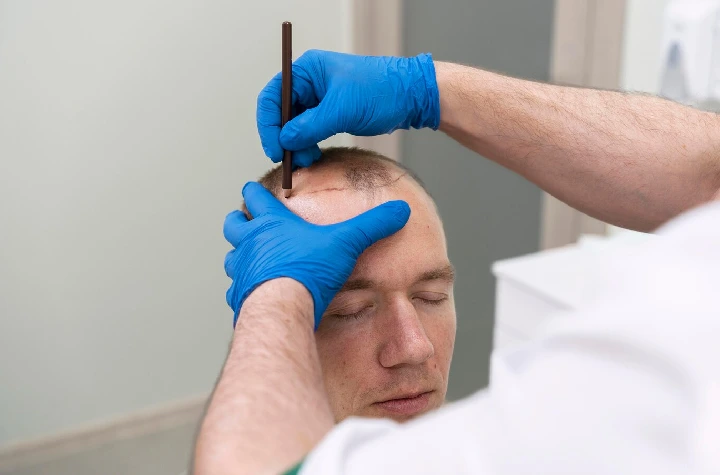
The number of grafts needed and the condition of the donor area may influence which harvesting method is proposed. In some cases, a strip-based approach may allow the surgical team to obtain a significant number of follicular units while preserving other parts of the donor region.
That does not make it automatically appropriate for a large procedure. The patient’s hair-loss pattern, scalp characteristics and future needs still require careful assessment.
The surgeon should explain why FUT is being recommended rather than simply presenting it as one item on a price list. Patients should understand the expected advantages and disadvantages compared with other available approaches.
A second opinion can also be useful if there is uncertainty about which method best suits the case.
Long-Term Planning Is More Important Than Technique Names
A successful transplant needs to look sensible as the patient gets older. Existing non-transplanted hair may continue to thin, meaning the surgeon has to think beyond the areas currently affected.
Hairline position, graft distribution and donor preservation all contribute to this long-term strategy. A technically successful operation can still create an awkward future result if progressive hair loss was not considered beforehand.
Patients should therefore judge a clinic by the quality of its assessment rather than by whether it promotes one method more strongly than another.
FUT remains one possible surgical approach, with its own benefits and limitations. The best decision comes from understanding those trade-offs clearly and choosing a treatment plan based on donor capacity, hair-loss pattern, personal preferences and realistic expectations.